A historical electrical job now available in MIQ contains two different descriptions: a plan for four ceiling-hung fixtures and a later report that several fixtures and an illuminated open sign were installed and tested. Keeping those descriptions distinguishable is useful when moving service records between systems.
The work originated in FieldProMax. The source record was imported into MIQ on July 30, 2026, after the original work. In this example, MIQ's verified role is the current archive and review of that imported history.
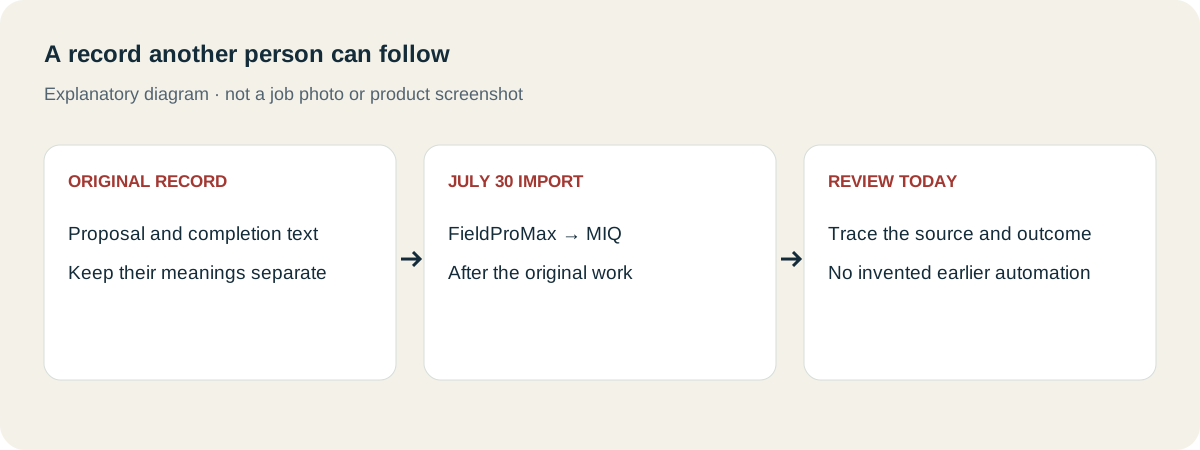
Start with what each part of the record establishes
The planning portion describes four proposed fixtures, new power, outlets and mounting. The completed return-visit portion describes several installed fixtures and an open sign, together with wiring, outlets and mounting hardware. It reports a final operating test and management verification and sign-off.
The Masterline Facilities electrical installation case covers the field work. The important software lesson is how the current record should be interpreted: the proposed count is not a verified completed count, and an imported note is not a newly performed job.
| Information | What it means here |
|---|---|
| Planned work | The intended scope described in the original planning text. |
| Reported completion | The installation and test described in the later return-visit text. |
| MIQ import | A later system event that made the historical record available in MIQ. |
An import date is not a service date
The saved notes include June 1 and July 15 date labels. Those labels do not supply full timestamps in the note text. The imported record has additional source dates, but the review does not need to invent an exact completion time to explain the work.
July 30, 2026 identifies the later import. It should not become the installation date, a new customer inquiry or evidence that MIQ dispatched the original visit. The record also does not establish a MIQ billing or payment handoff for this job.
A suggested review before relying on imported history
- Identify the originating system and distinguish its dates from the later import.
- Separate requested, proposed and performed work in any summary.
- Preserve uncertain quantities and incomplete dates as open details.
- Check what supporting notes or attachments are actually available before describing a complete evidence packet.
These are suggested review steps. They are not a claim that MIQ automatically validates every imported record or resolves missing source information.
Use the right example for the workflow
Historical continuity is one role for field service software. Jobs whose visits and closeout records were managed in MIQ provide a different type of evidence. The connected service-job examples explain those records and keep field completion separate from billing and payment.
The NCRC acquisition continuity case considers a related management question: how to keep relationships and source context understandable during a change. MIQ remains Masterline's internal operating system and is not currently for public sale. See the current product context.
Based on one historical FieldProMax record now available in MIQ. The reviewed record supports an archive-and-review example; it does not establish MIQ management of the original intake, dispatch, installation or billing.